
LOCAL HISTORY
Designing the Future, Defending Our Rights Since 1973
UAW Local 1869 was born out of determination, solidarity, and vision. In 1973, after a hard-fought organizing campaign and a successful election, the Advanced Engineering Department within GM Design became officially recognized as a UAW bargaining unit—establishing Local 1869 as the first all-salaried UAW local within General Motors.
Early on, the local faced serious challenges. Just one year after its founding, a decertification attempt threatened to dismantle what members had just fought to build. But through unity and perseverance, the effort was defeated in January 1975. That May, members secured a major victory: the negotiation of our first collective bargaining agreement with GM
Our Roots in Engineering and Innovation
Originally made up of draftspersons in engineering section drawing and surface development, the department evolved as rapidly as the technology it supported. In 1978, under the leadership of Ken Pickering, the group was renamed Surface and Prototype Engineering—a title that better reflected their forward-looking work.
Over the decades, the names and job functions changed, but the work remained critical to GM Design. Our members have been known under many banners—Experimental Engineering, Exterior and Interior Engineering, Automotive Product Engineering, Surface & Prototype Engineering, and more. As the department eventually split between surface development and prototype functions, Local 1869 expanded, establishing a second district.
Today, those original groups are known as:
- Surface Product Engineering (SPE)
- Fabrication Engineering (Fab. Eng.)
Growing in Strength and Skill
In 1985, Local 1869 welcomed its third district: the Trim Shop, part of the fabrication operations within GM Design. These skilled craftspeople have long been responsible for the interior trim work across GM’s design operations. Though affiliated with Pre-Production Operations (PPO) at various times, they’ve always remained a vital part of Local 1869’s legacy and future.
History Spotlight: Calfin vs General Motors
In September of 1976, Maurice “Maury” Calfin and other members of UAW Local 1869 filed a complaint against General Motors, with the support of UAW legal counsel, for being paid less than the required rate for for overtime (1.5x base rate) as determined by the US Fair Labor Standards Act (FSLA). GM had been paying them less for their overtime work by classifying certain design draftspersons and other employees as ‘Professional Exempt’. The US Department of Labor was informed of the legal complaint and immediately got involved.
Though it took almost a year of legal wrangling, in June of 1977, UAW attorney Leonard Page was informed by the Department of Labor that they had entered into a settlement agreement with General Motors to reclassify several thousand white collar workers at GM to ‘non-exempt’ - meaning they were entitled to the full overtime compensation they were owed. About 1500 of the affected employees were located at the GM Technical Center in Warren, MI and included 57 senior design engineers and senior project engineers, several of whom were members of UAW Local 1869.
As a result of this settlement with the Department of Labor, Judge James P. Churchill entered a “Consent Judgement” against GM. This ruling decreed that effective August 1, 1977 each of the plaintiffs would be compensated at a rate of not less than one and one half times their regularly hourly rate for all hours worked in excess of 40 hours.
On hearing this judgement Maury Calfin and Don Savage, another plaintiff and UAW Local 1869 Member, said it was “long overdue equity”. At the time, employees were working 300-400 hours of overtime a year, some members seeing significant increases in their rates.
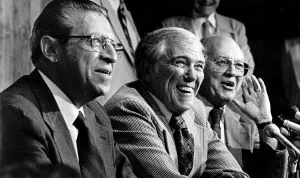
UAW Vice-President and Director of UAW GM Department, Irving Bluestone, and then Region 1 Director Stephen P. Yokich stated, "Without the union's lawsuit, the reclassification of 3,000 GM white-collar employees to non-exempt status, bringing them under the full overtime pay requirements of the federal law, probably never would have happened. Those non-union employees are receiving that benefit because of UAW and that is typical of many other benefits they enjoy.”